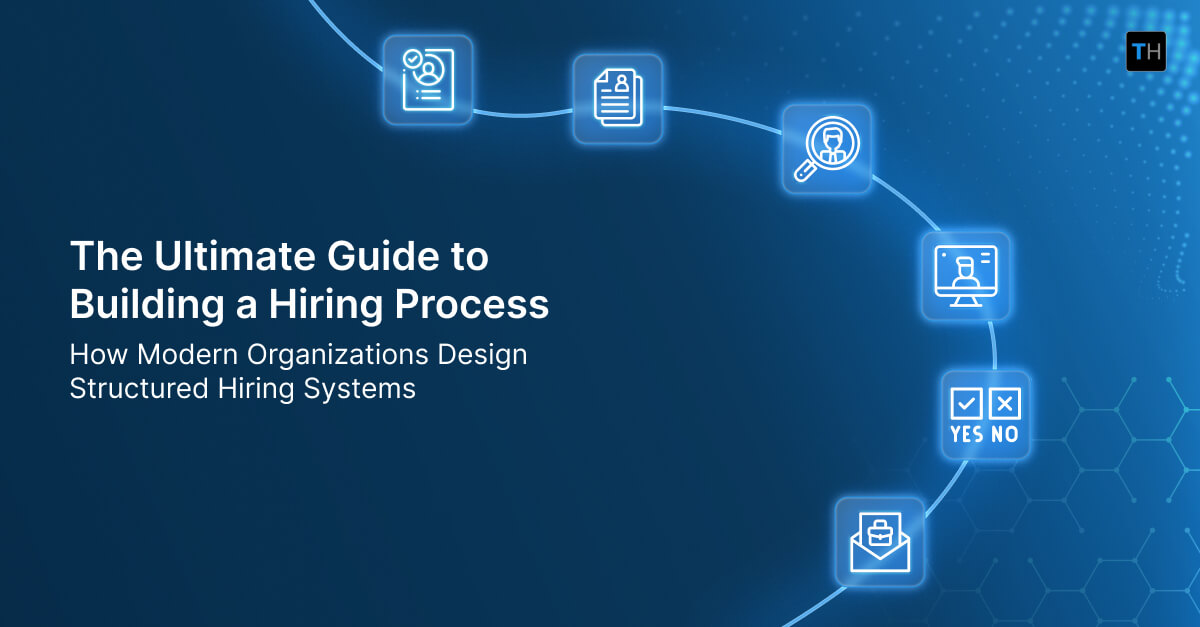


A hiring process runs smoothly as long as organizations stick to occasional hiring. However, things go awry once organizations enter the realm of high-volume hiring.
It is common knowledge that hiring can make or break an organization. That is precisely why companies invest heavily in hiring. They hire recruiters, build processes, adopt new tools, and continuously refine their approach. Despite all the processes and equipment, a company’s hiring process fails at scale. In fact, 60% of candidates report having a poor hiring experience, and 72% of them share that experience with others, amplifying the impact of hiring inefficiencies.
At first, the signs appear minor, and the organizations think there is nothing to worry about. They accept that longer interview schedules, delayed feedback, mass candidate drop-offs, and back-and-forth between recruiters and stakeholders are nothing more than hiccups. However, little do they know that the hiccups culminate in bottlenecks.
Interview panels struggle to keep up and evaluate bloating pipelines. Hiring managers fail to catch a break as they are forced to juggle multiple roles at once. Several stakeholders lay out their feedback before decisions are finalized.
Hiring stops behaving like a straightforward recruiting activity. It takes a life of its own and starts behaving like an operational burden.
Why Hiring Processes Break Under Scale
Hiring processes rarely collapse overnight. They tend to weaken gradually as structural issues begin to surface.
Several patterns appear repeatedly in organizations that experience hiring slowdowns.
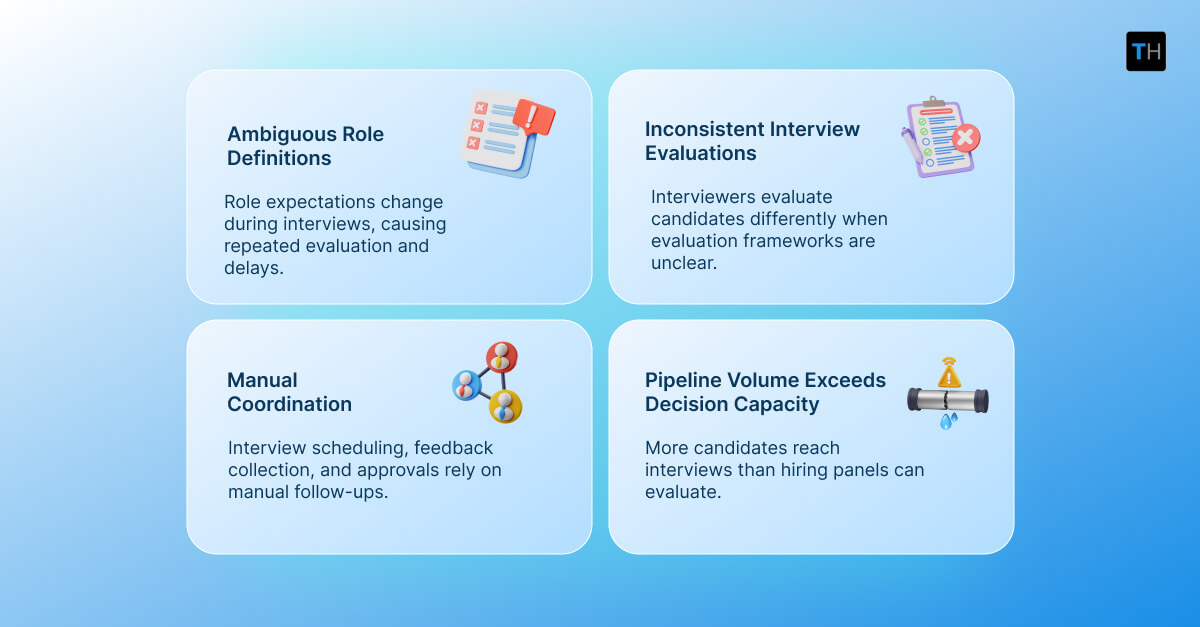
1. Ambiguous Role Definitions
Most hiring processes begin with a job description. However, job descriptions often remain broad and generic.
They outline responsibilities but rarely define the specific capabilities required to succeed in the role.
Candidates are screened on the basis of generic requirements. This leads to the hiring managers tinkering with the expectations during interviews with candidates. This dynamic creates a vicious loop.
Interviewers keep asking similar questions across multiple rounds. Due to a lack of clarity, stakeholders adjust their expectations midway through the process. The criteria for evaluation are all over the place because of a lack of clarity. Candidates experience this as repetition.
Role ambiguity early in the process leads to recalibration, which in turn leads to repetition. As a result, the entire hiring cycle is slowed down.
2. Inconsistent Evaluation Frameworks
Different interviewers often evaluate candidates through different lenses. One interviewer may focus on technical capability. While another may prioritize communication or team fit.
These perspectives are valuable individually. However, problems arise when they are not anchored to shared evaluation criteria.
Feedback becomes difficult to compare across interviewers. Hiring discussions begin to revolve around impressions rather than structured observations. Decision-making moves at a snail’s pace because stakeholders must interpret feedback rather than review consistent evidence.
Structured evaluation frameworks prevent these situations by ensuring that interviewers assess candidates against the same capability signals. Interview feedback becomes harder to consolidate as it is not built on common grounds.
3. Coordination Relies on Manual Effort
Many hiring processes still depend on manual coordination.
Recruiters schedule interviews using the good old email exchanges. Interviewers submit feedback through separate documents or delayed messages. Hiring managers follow up with stakeholders to confirm decisions.
At a smaller scale, this approach works reasonably well.
However, manual coordination becomes increasingly demanding as hiring volume grows.
Thanks to manual coordination, recruiters end up spending more time sending reminders and collecting feedback than evaluating candidates. Interview schedules shift repeatedly before confirmation. Decision timelines stretch as stakeholders respond at different intervals.
Over time, coordination consumes more effort than evaluation.
4. Pipeline Volume Outpaces Decision Capacity
Candidate pipelines tend to grow faster than the organization’s ability to evaluate them.
Recruiters double down on their sourcing efforts. They seek help from screening tools to filter large volumes of applications. Early-stage candidate movement may even accelerate. However, interview capacity often remains unchanged. The average hiring process now takes around 44 days globally, and many roles take even longer when interview cycles expand.
The same hiring managers and interview panels must evaluate an increasing number of candidates. Stakeholders struggle to keep up with the overwhelming volume and the feedback is delayed. Once the early stages are over, candidates experience delays after delays. Research shows 57% of job seekers lose interest when hiring processes take too long.
5. Lack of Visibility Into Hiring Bottlenecks
Many organizations struggle to identify where hiring delays actually occur.
Teams lack visibility into stage-level performance without clear hiring metrics.
Several signals remain hidden:
- Candidates dropping off midway through the process
- Feedback delays between interview rounds
- Long gaps between final interviews and offers
Organizations struggle to diagnose the root cause of slow hiring as these signals remain invisible. In response, teams often add additional interviews or approval layers to strengthen decision confidence. As a result, the hiring process becomes heavier.
Moving From Hiring Activity to Hiring Systems
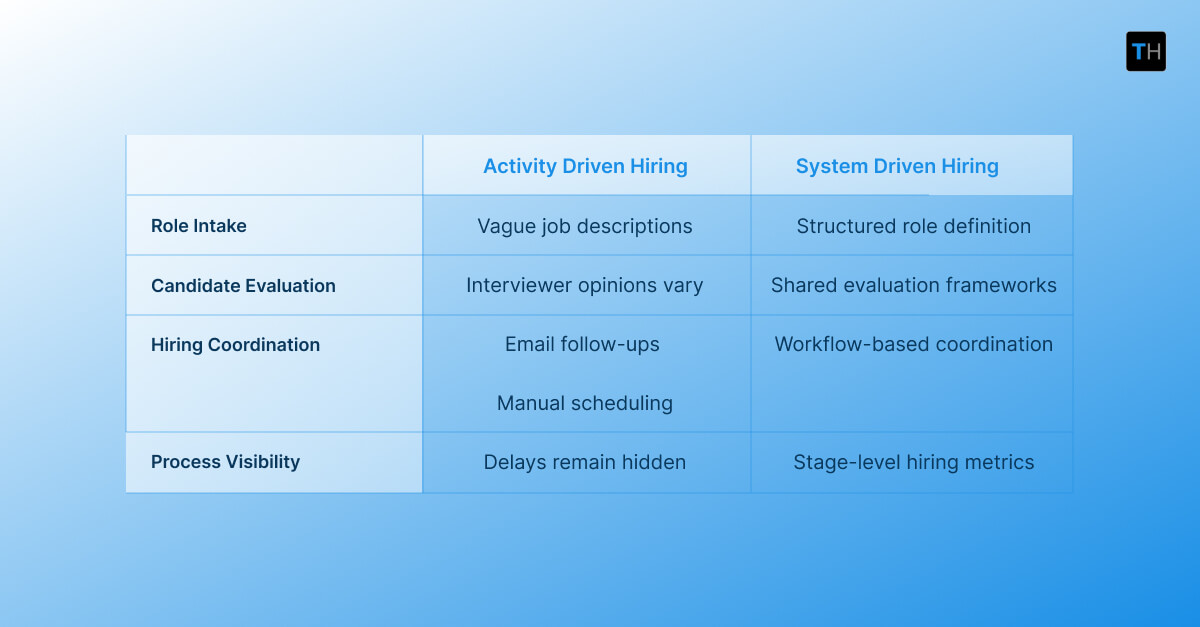
Organizations that hire successfully at scale treat hiring as a coordinated system rather than a series of isolated tasks. A structured hiring system introduces clarity and coordination across the entire process. Key elements include:
- Standardized Role Intake
Role intake becomes structured so recruiters and hiring managers align on capabilities and success criteria before candidate evaluation begins. - Consistent Evaluation Frameworks
Interviewers assess candidates using shared evaluation criteria. This ensures feedback remains comparable and hiring decisions rely on consistent signals. - Defined Hiring Workflows
Each stage of the hiring process has clear expectations and ownership. Interviewers understand when feedback is required and who is responsible for the next decision. - Centralized Hiring Metrics
Hiring metrics provide visibility into stage-level performance and reveal where delays or bottlenecks occur. - Stable Candidate Movement Across Stages
These elements reduce coordination friction and help candidates move steadily through the hiring pipeline. - Improved Hiring Velocity Through Coordination
Hiring velocity improves because stakeholders remain aligned and transitions between stages become predictable.
Read eBook: Hiring in the Age of AI: What Actually Determines Hiring Speed
Conclusion
Hiring processes rarely fail because recruiting teams stop working hard. They fail because the underlying hiring system struggles to handle increasing complexity.
Structured hiring systems address this challenge by stabilizing how candidates move through evaluation stages.
Organizations that treat hiring as operational infrastructure maintain hiring velocity even as hiring volume increases. Long-term hiring success ultimately depends on the strength of the system that supports it. TurboHire helps organizations nail their hiring process without crumbling under scale.
Frequently Asked Questions (FAQs)
1. Why do hiring processes fail when organizations scale?
Hiring processes often fail at scale because the system was designed for smaller hiring volumes. As more roles open and more stakeholders participate, coordination becomes harder. Ambiguous role definitions, inconsistent interview evaluations, delayed feedback, and manual scheduling create bottlenecks. Without structured workflows and clear ownership, these delays accumulate and slow down hiring velocity.
2. What are the most common bottlenecks in a hiring process?
Common hiring process bottlenecks include unclear role definitions, inconsistent evaluation frameworks, delayed interviewer feedback, scheduling conflicts, and slow approval workflows. These issues create gaps between hiring stages, which leads to longer time-to-hire and higher candidate drop-off rates. Identifying these bottlenecks through hiring metrics helps organizations stabilize the hiring process.
3. How can organizations improve hiring velocity without compromising hiring quality?
Organizations improve hiring velocity by introducing structure into the hiring process. Clear role intake, standardized interview frameworks, defined decision ownership, and centralized hiring metrics help candidates move steadily through evaluation stages. Recruitment automation and modern hiring platforms also reduce manual coordination, allowing hiring teams to focus on evaluating candidates rather than managing logistics.