

Skills-based hiring is an approach within modern talent acquisition that evaluates candidates based on demonstrated capability rather than titles, degrees, or brand-name employers. As hiring becomes more complex and competitive, relying on proxy signals makes it harder for talent acquisition teams to consistently predict performance.
For recruiters operating inside larger talent acquisition systems, this shift is practical. When evaluation criteria reflect what the role actually demands, screening becomes clearer, and quality of hire improves. 85% of employers now report using skills-based hiring practices, and around 64.8% apply these methods for entry-level hiring
What Is Skills-Based Hiring?
Skills-based hiring is an approach that prioritizes observable, measurable abilities required for success in a role. 75% of employers report improved quality of hire when using skills-based assessment tools, and organizations that have adopted these practices tend to see about 30% higher employee retention within two years of hire.
A skill reflects the capacity to perform a task, solve a problem, or deliver a defined outcome. Instead of assuming competence from experience length or employer brand, recruiters validate whether a candidate can execute the work itself.
This typically involves:
- Defining the core skills required for the role
- Screening candidates against those capabilities
- Structuring interviews to assess specific competencies
The focus moves from résumé interpretation to capability verification.
How It Differs from Traditional Hiring
Traditional hiring often relies on shorthand indicators:
- Years of experience
- Degree qualifications
- Recognizable employers
- Familiar job titles
These signals provide context, but they do not consistently predict performance. Two candidates with identical titles may have handled very different scopes of work. A degree may signal academic exposure but not applied competence.
Skills-based hiring reduces reliance on these shortcuts. It centers evaluation around clearly defined abilities tied to actual job requirements.
This creates greater consistency in decision-making. Candidates are compared against the same capability criteria rather than subjective impressions.
Why Skills-Based Hiring Improves Quality of Hire
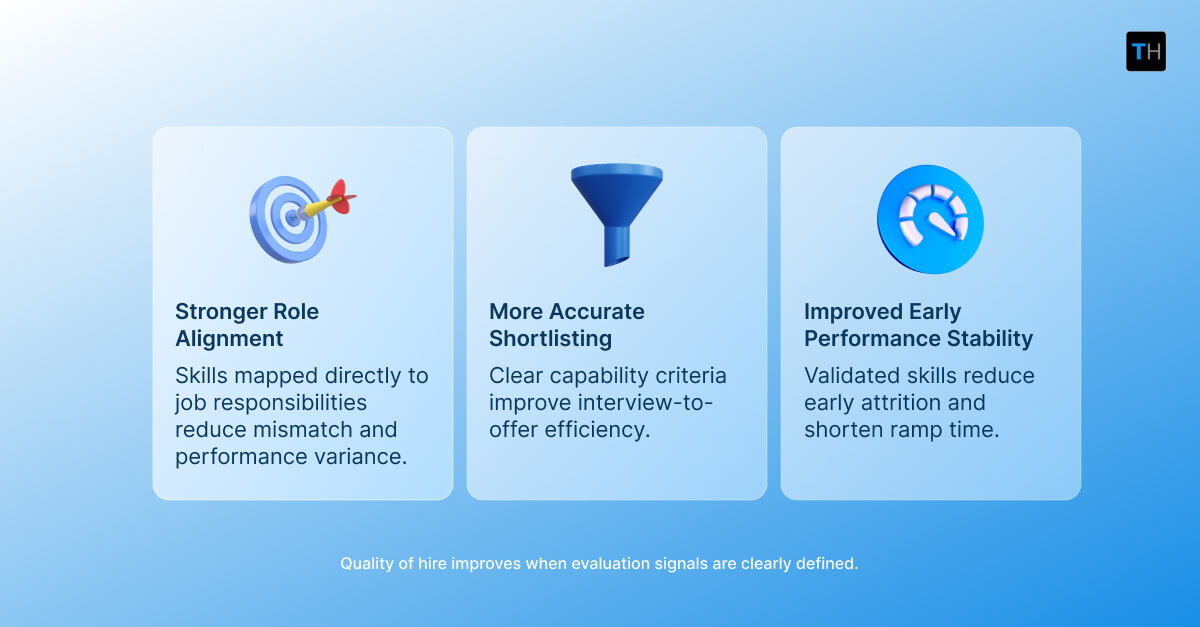
Quality of hire reflects how well a new employee performs, adapts, and sustains performance over time. When hiring is structured around skills, improvements typically appear in three areas.
1. Stronger Role Alignment
Skills are mapped to the real demands of the job. Capability gaps come to the fore beforehand when screening mirrors actual responsibilities.
This reduces mismatches between expectation and execution and strengthens performance stability after onboarding.
2. More Accurate Shortlisting
Clear skill criteria allow recruiters to filter candidates more precisely. Fewer unqualified profiles move into interviews. Hiring managers spend time evaluating candidates who meet defined performance thresholds.
Interview-to-offer efficiency improves when screening precision improves.
3. Improved Early Performance Stability
Ramp time often shortens when hires are selected based on validated capability. Early attrition caused by skill mismatch becomes less frequent.
Quality of hire improves because evaluation criteria were tied to performance from the start.
What Skills-Based Hiring Looks Like in Practice
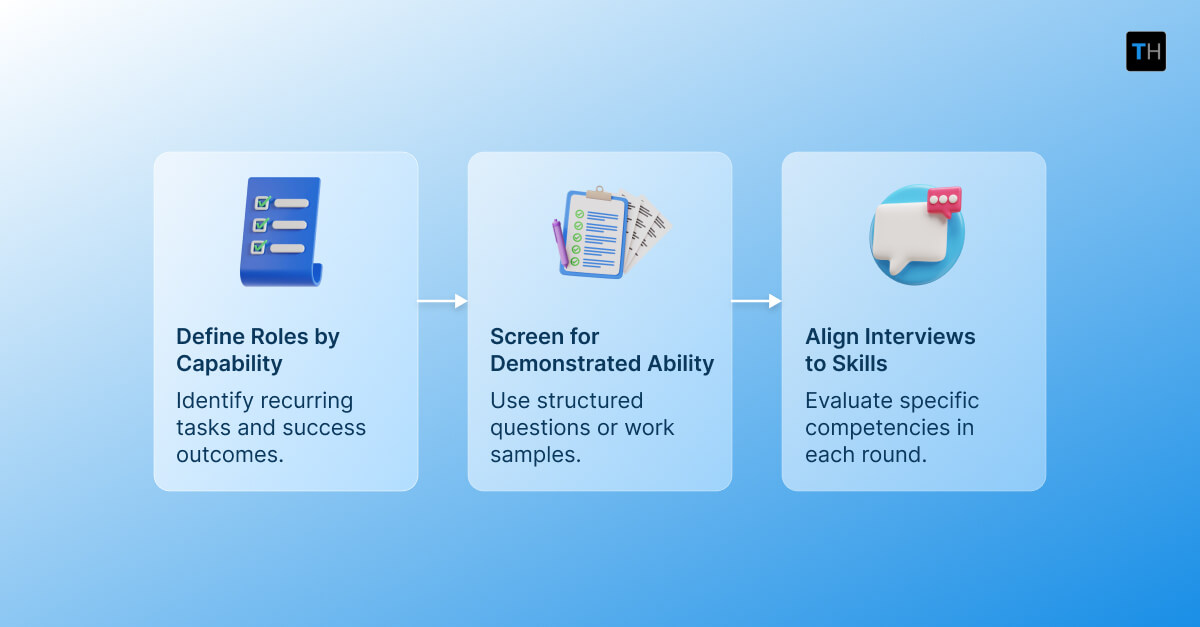
Skills-based hiring does not require a complete redesign of recruiting operations. It requires clarity in how roles are defined and evaluated.
1. Define Roles by Capability
Begin by identifying what the person must accomplish in the role. What tasks are recurring? What outcomes define success?
From there, translate those outcomes into required skills. This ensures screening reflects performance expectations rather than assumptions based on background.
2. Screen for Demonstrated Ability
Screening can include structured questions, work samples, or task-based exercises that validate specific capabilities.
The goal is not to eliminate judgment but to anchor it in observable evidence.
3. Align Interviews to Defined Skills
Each interview round should assess clearly identified competencies. This reduces repetitive conversations and improves consistency across interviewers.
Hiring discussions become more focused and comparable when evaluation is structured.
Why This Matters for Recruiters
Recruiters balance speed, quality, and stakeholder expectations. Skills-based hiring supports all three.
Clear capability criteria:
- Reduce ambiguity during screening
- Improve collaboration with hiring managers
- Increase confidence in shortlists
- Minimize rework from rejected candidates
Instead of debating whether a candidate’s experience appears relevant, recruiters can anchor decisions in defined performance requirements.
Over time, this clarity strengthens the overall hiring process.
Skills-Based Hiring Within the Broader Hiring Process
Skills-based hiring works best when integrated into the broader hiring workflow. Capability definitions should inform intake discussions, screening logic, interview structure, and performance feedback loops.
Hiring becomes more structured and measurable when skill criteria are consistently applied across stages. Quality of hire improves because evaluation signals remain aligned from initial screening through offer.
Embedding this discipline into everyday recruiting practice strengthens the overall hiring system without adding unnecessary complexity.
Conclusion
Skills-based hiring shifts the focus from background labels to demonstrated ability. Recruiters improve screening precision and strengthen the quality of hire by defining roles through capability and aligning evaluation to performance requirements.
Organizations that treat skills as structured evaluation inputs build more consistent hiring outcomes. The first step is examining how capability is currently defined and validated within your hiring process.
Embedding skills into hiring requires more than intent. It requires structured intake, aligned screening workflows, and consistent capability evaluation across stages.
TurboHire supports this approach by enabling structured skill capture and intelligent matching based on defined competencies. Recruiters can pull off skills-based hiring with greater precision when hiring infrastructure aligns with capability criteria.
Frequently Asked Questions (FAQs)
1. What is skills-based hiring?
Skills-based hiring evaluates candidates based on demonstrated abilities required for a role rather than relying primarily on titles, degrees, or employer reputation.
2. How does skills-based hiring improve quality of hire?
Skills-based hiring aligns evaluation criteria to actual job requirements, reducing skill mismatches, improving early performance stability, and increasing screening accuracy.
3. What is the difference between skills-based hiring and traditional hiring?
Traditional hiring often relies on proxy indicators such as length of experience and education. Skills-based hiring focuses on validating measurable capabilities tied directly to role outcomes.